How to read sodium per serving
The number on the front of a package and the number you will actually eat are rarely the same.
- 6 min read
- Kidney Daily editorial team
- Editorial draft
This prototype page is not approved health guidance and is blocked from search indexing. Its claims and sources still require an accountable author, a source check, and the qualified review shown at the foot of the page before publication.
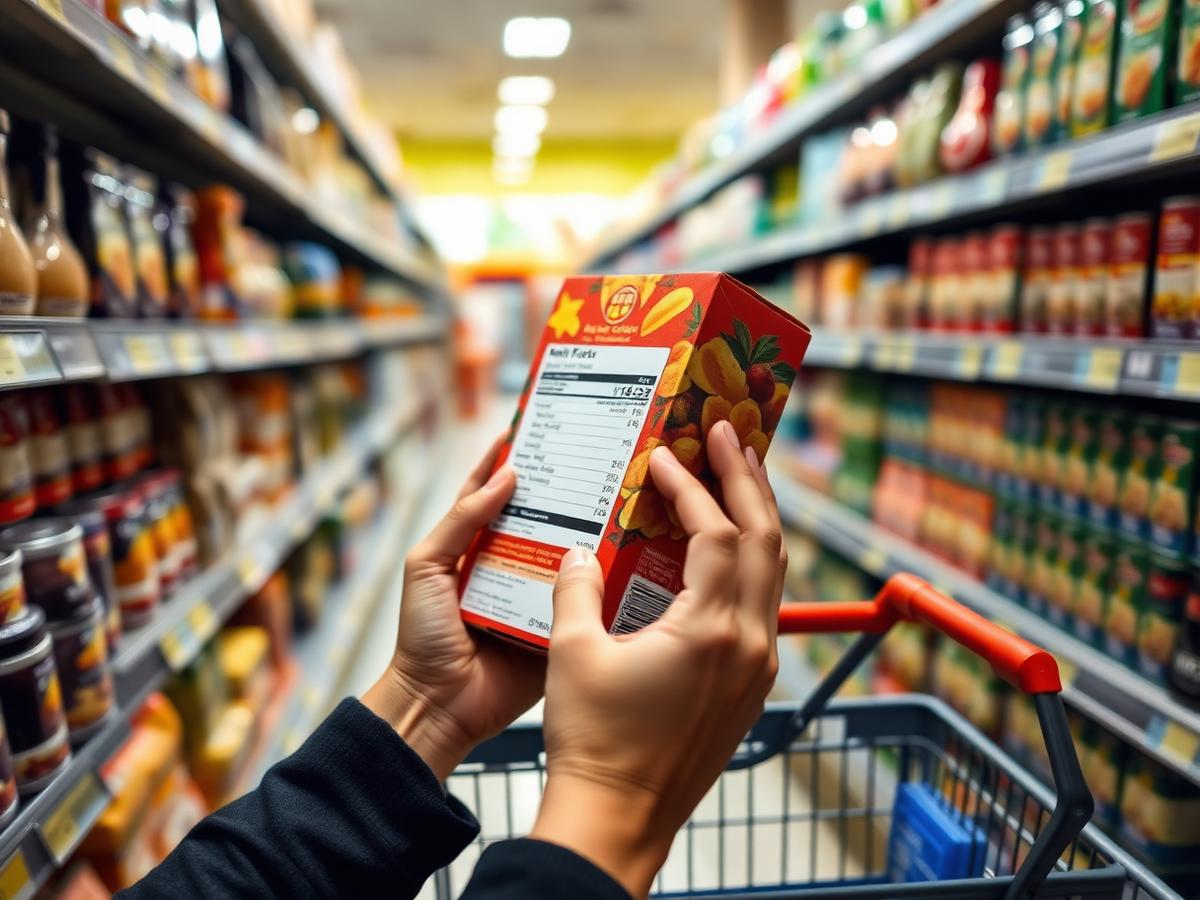
Sodium is listed per serving, and the serving on the package is often smaller than the portion in the bowl. Learning to do one quick piece of arithmetic in the aisle makes labels far more useful.
Start with the serving size, not the sodium
The serving size appears near the top of the nutrition panel because the values below it apply to that stated amount. If a package contains more than one serving, the amount you use may represent more than one set of the listed values.
Compare like with like
- Check whether the two packages use the same serving size. If they do not, convert one.
- Divide the sodium by the serving weight in grams to get a per-gram figure for a fair comparison.
- Consider the portion you will realistically eat, not the printed portion.
- Note the result somewhere you will see it again next shopping trip.
Front-of-pack claims are marketing, not the panel
Phrases like reduced, light, or no added salt describe a comparison to another product, not an absolute amount. Reduced sodium can still be a high-sodium product. The nutrition panel and the ingredient list are the parts worth reading.
What not to change on your own
- There is no universal sodium number that fits everyone with kidney disease — ask your care team what, if anything, they want you to aim for.
- Do not switch to a salt substitute to solve a sodium instruction without asking first.
Sources
- Nutrition facts tablesHealth Canada · Updated September 5, 2024
- Sodium: using food labelsHealth Canada · Updated July 11, 2025
- Serving Size on the Nutrition Facts LabelU.S. Food and Drug Administration · Accessed August 11, 2026
Author status
Editorial draft
Reviewer status
Nutrition review pending
- Editorial status
- Editorial draft — not published
- Review status
- Nutrition review pending
- Something wrong?
- Request a correction
Keep reading
Label skills · 5 min read
What "PHOS" ingredients mean on a food label
A short reading trick for spotting added phosphorus in an ingredient list.
Editorial draft · Qualified review pending
Ask first · 5 min read
Questions to ask before using a potassium-based salt substitute
Salt substitutes are not a neutral swap. Here is what to ask first.
Editorial draft · Qualified review pending
Cooking skills · 8 min read
Flavor-building techniques that do not rely entirely on salt
Acid, heat, aromatics, and texture do a lot of the work people assign to salt.
Editorial draft · Qualified review pending